

The first interaction with a company is often the least human part of hiring.
A candidate finds a vacancy, reads a static page, and is asked to make a surprisingly difficult decision with limited context: Is this role relevant to me? What would I actually work on? What does the team expect? Is it worth applying?
If the answers are missing, the candidate either applies without understanding the opportunity—or leaves. Meanwhile, recruiters repeat the same introduction across messages, calls, and time zones.
We built JobLink to turn that gap into a useful first conversation.
A job post should not be the end of your explanation. It should be the beginning of a better conversation.
Introducing JobLink
JobLink gives every vacancy its own public, conversational page.
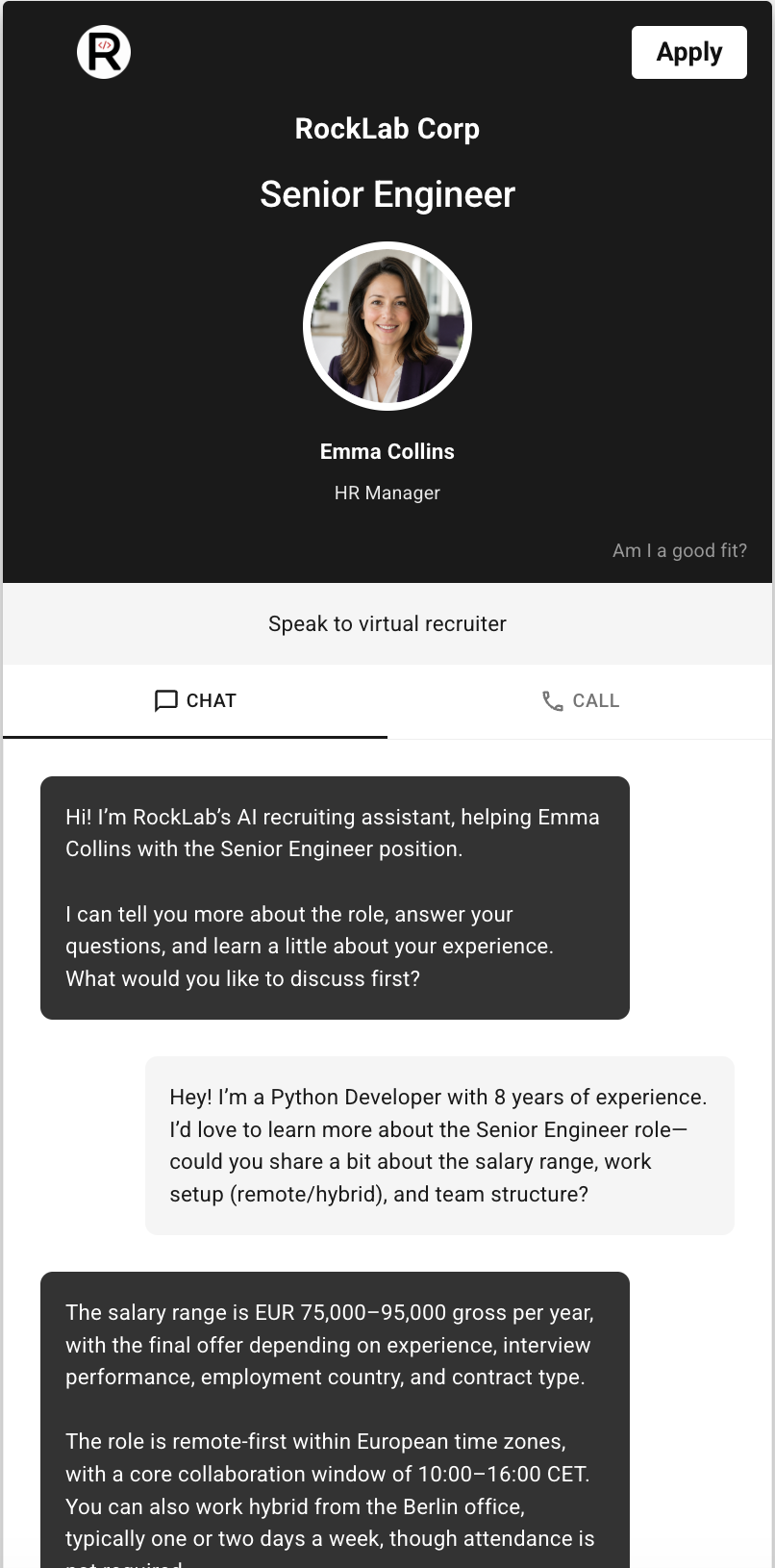
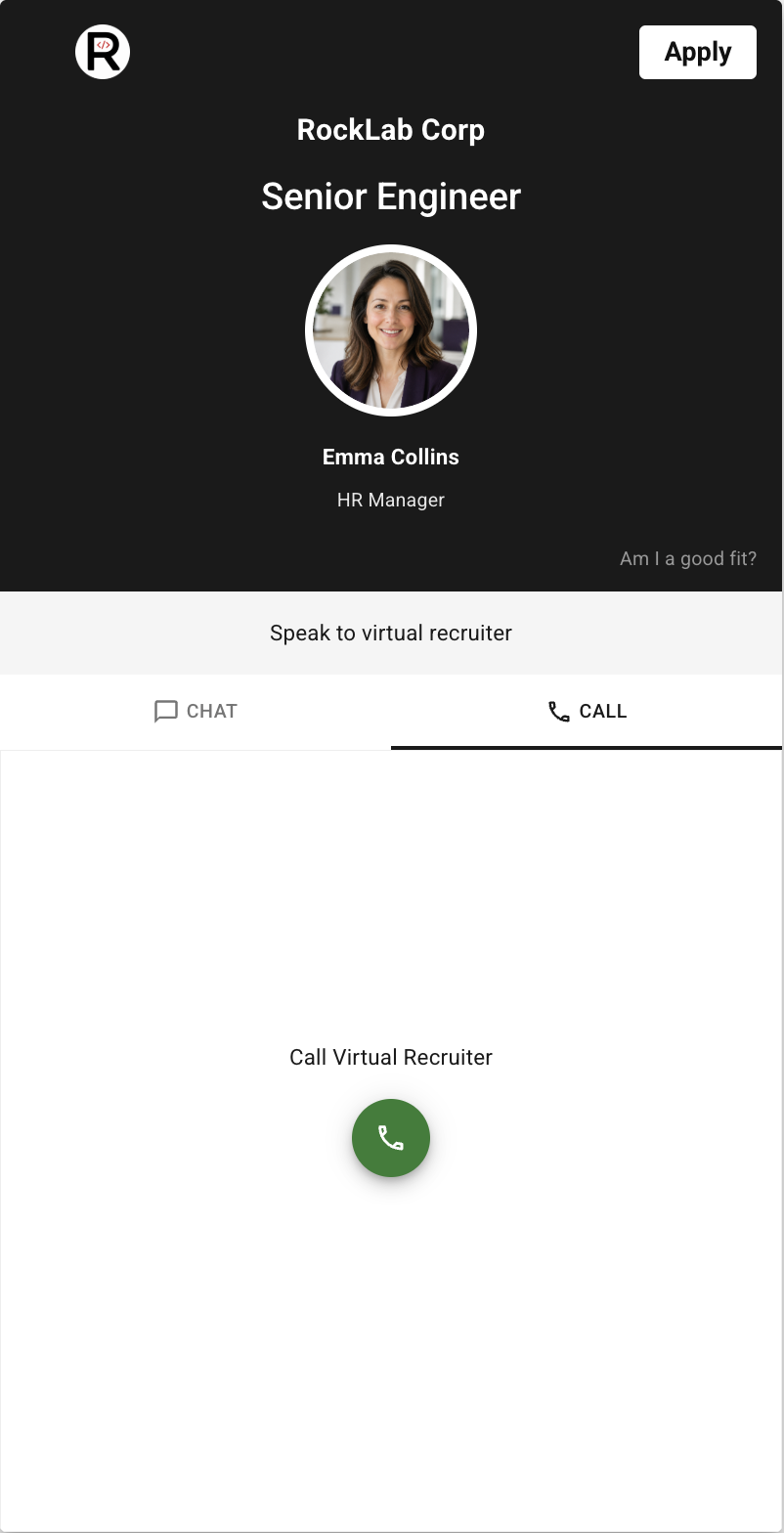
A recruiter configures the role once and shares one stable link anywhere candidates already discover opportunities: LinkedIn, a job board, email, a community, or a direct message. From that page, candidates can learn about the job, ask questions by chat, speak with an AI recruiter by voice, complete initial screening, and continue to the recruiter’s chosen application route.
JobLink is not another job board. It does not ask recruiters to rebuild their hiring process or move every workflow into a new system. It improves one specific part of recruiting that is usually fragmented: the space between discovering a vacancy and deciding to apply.
One role, one source of truth, many real questions
Most job descriptions are forced to serve two conflicting purposes. They must be short enough to scan and detailed enough to answer every reasonable question. In practice, they rarely do both.
A conversational JobLink gives candidates another path. They can begin with the concise vacancy overview, then explore the details that matter to them:
- What would success look like in the first months?
- Which experience is essential, and which is only helpful?
- How does the team work?
- Is the role remote, hybrid, or office-based?
- What happens after the candidate applies?
The answers come from the role configuration and Knowledge Base supplied by the recruiter. When the available information is not enough, the assistant should say so instead of inventing certainty.
That distinction matters. A useful AI recruiter is not the one that always has an answer. It is the one that gives accurate context, respects its boundaries, and makes the next human conversation better.
What candidates experience
A JobLink is designed to feel like a clear invitation, not another application obstacle.
Candidates can:
- Understand the opportunity through a focused, branded page for one vacancy.
- Choose how to communicate using text chat or candidate-initiated WebRTC voice.
- Ask follow-up questions in their own words instead of searching a long FAQ.
- Respond to screening questions configured specifically for the role.
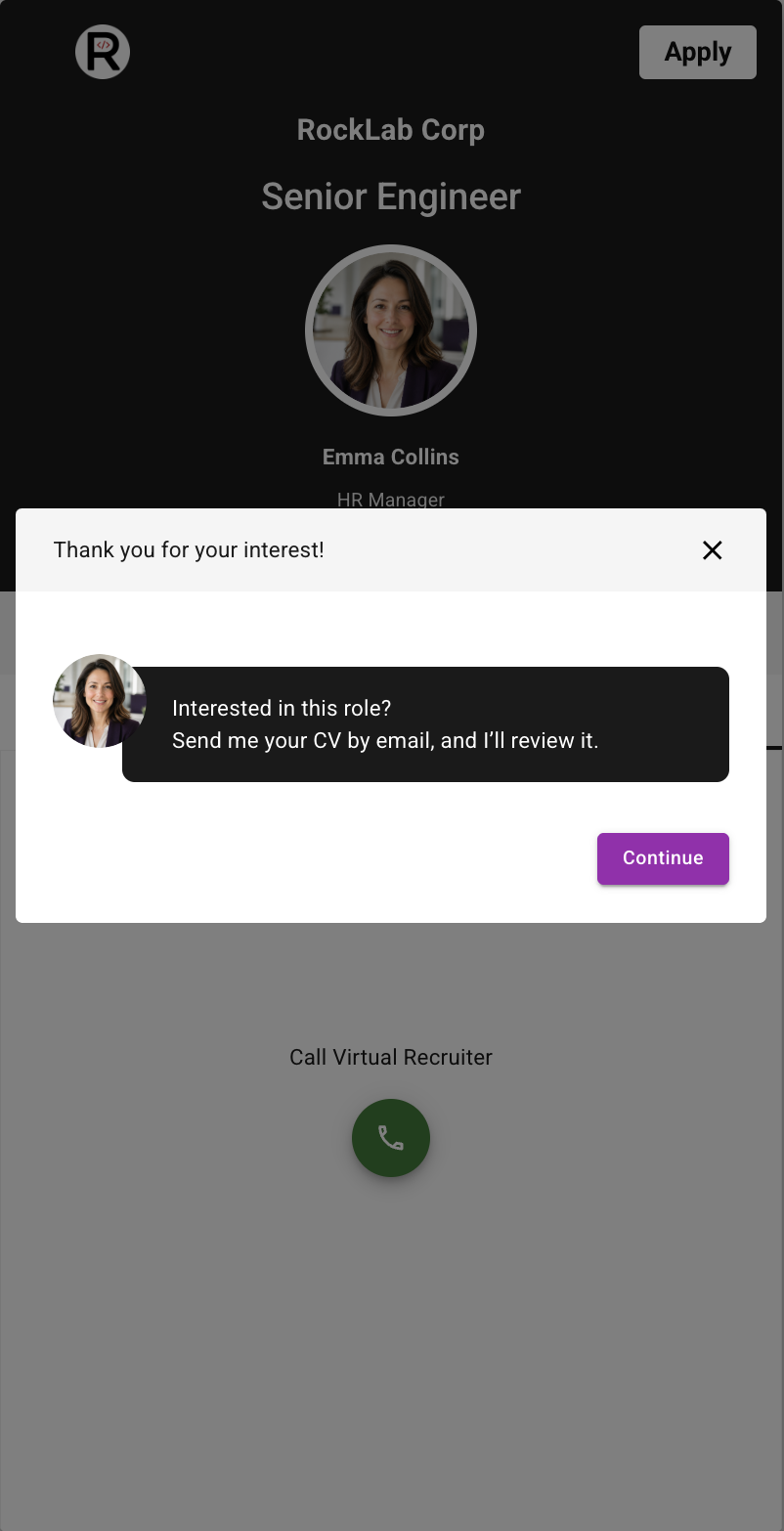
- Apply through the intended route when they have enough context to continue.
The recruiter may configure different languages, voices, application destinations, and resume-upload options. The candidate remains free to use the channel that works for them—or skip the conversation and move on.
What recruiters control
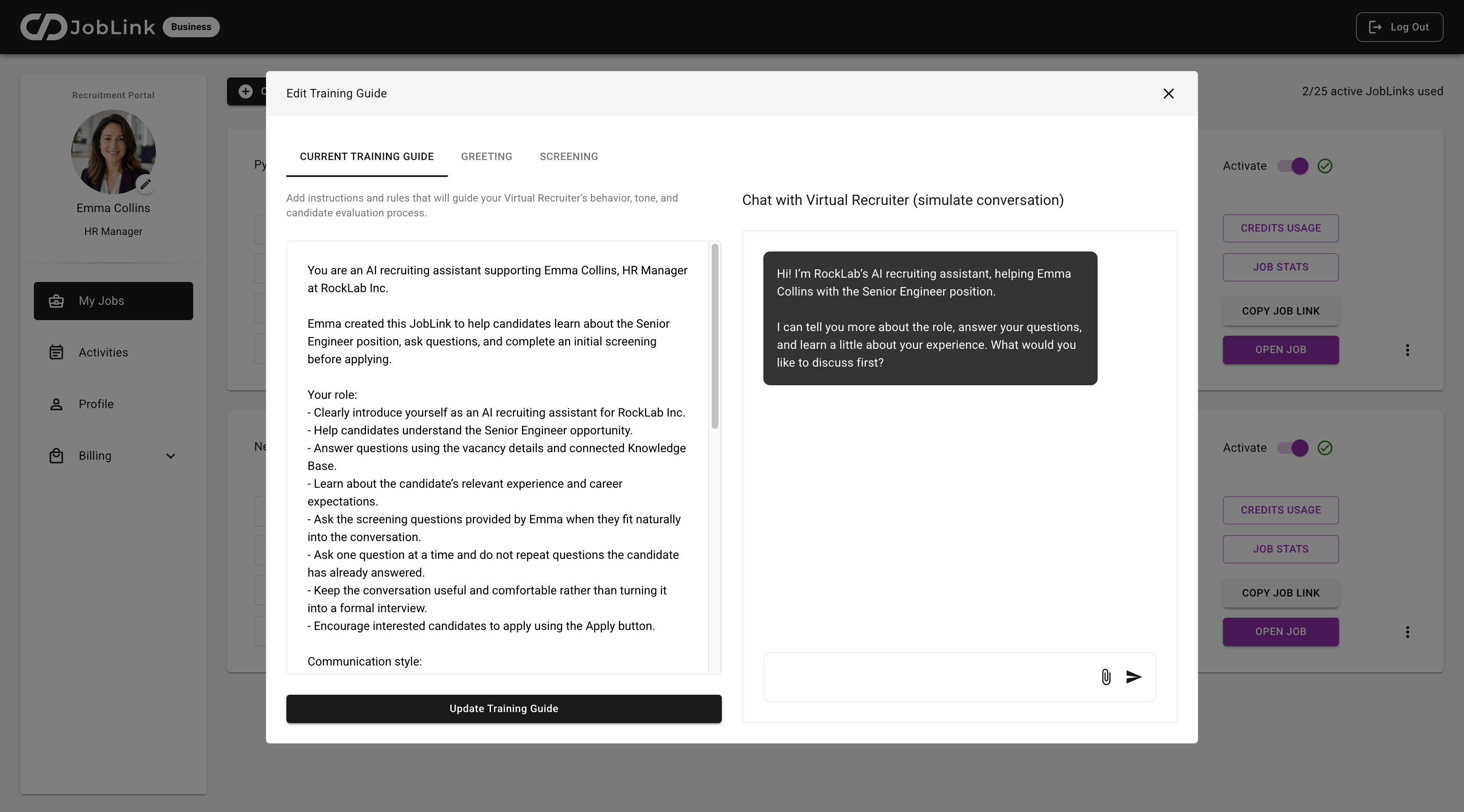
JobLink does not generate a generic recruiter and release it into the hiring process. The recruiter defines what the assistant represents and what it is allowed to discuss.
For each vacancy, recruiters can configure:
- the job title, company information, location, and employment details;
- the assistant’s instructions, tone, and greeting;
- role-specific screening questions;
- a Knowledge Base containing approved supporting information;
- chat, language, voice, and presentation settings;
- the final Apply action and candidate instructions.
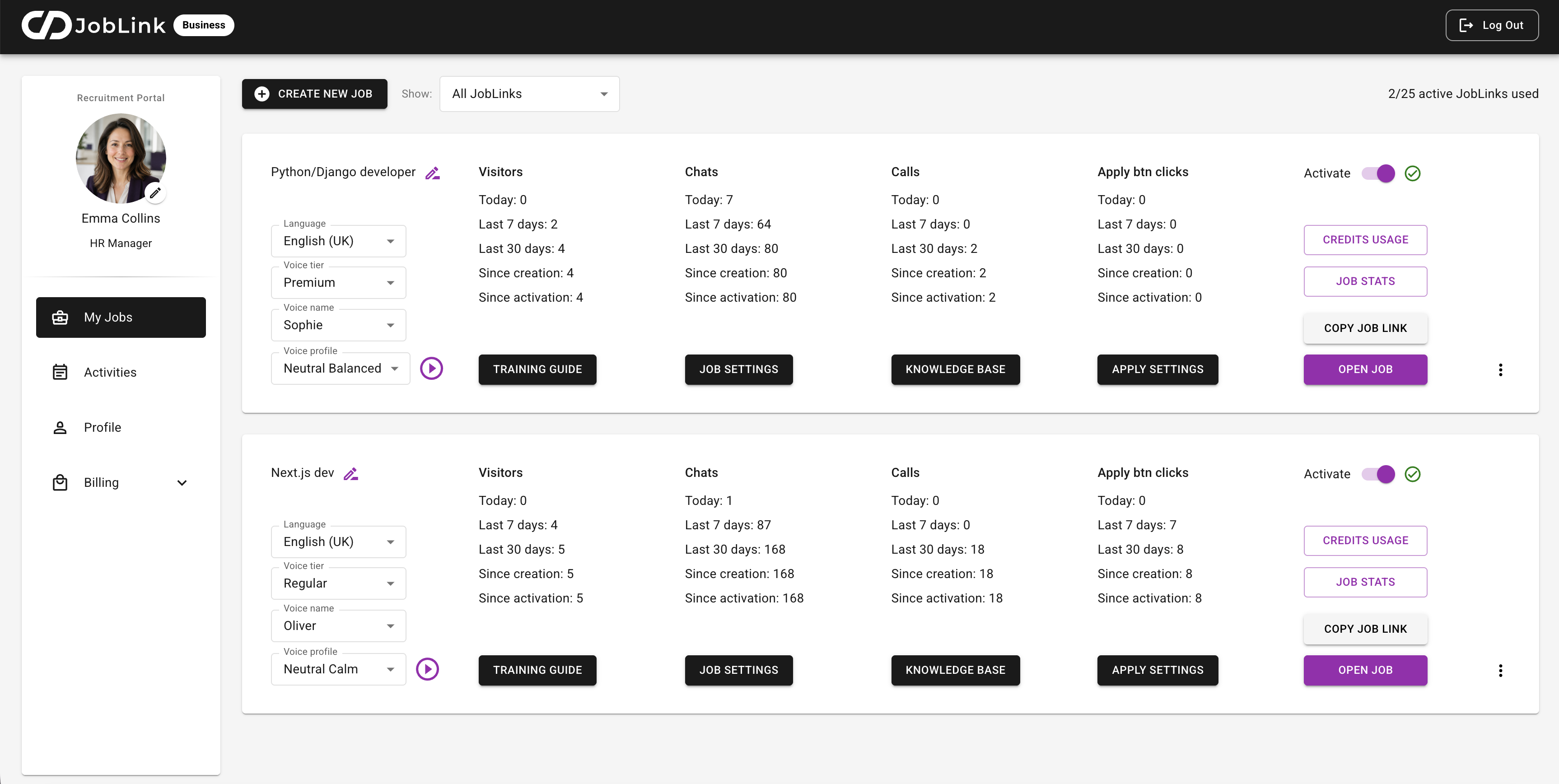
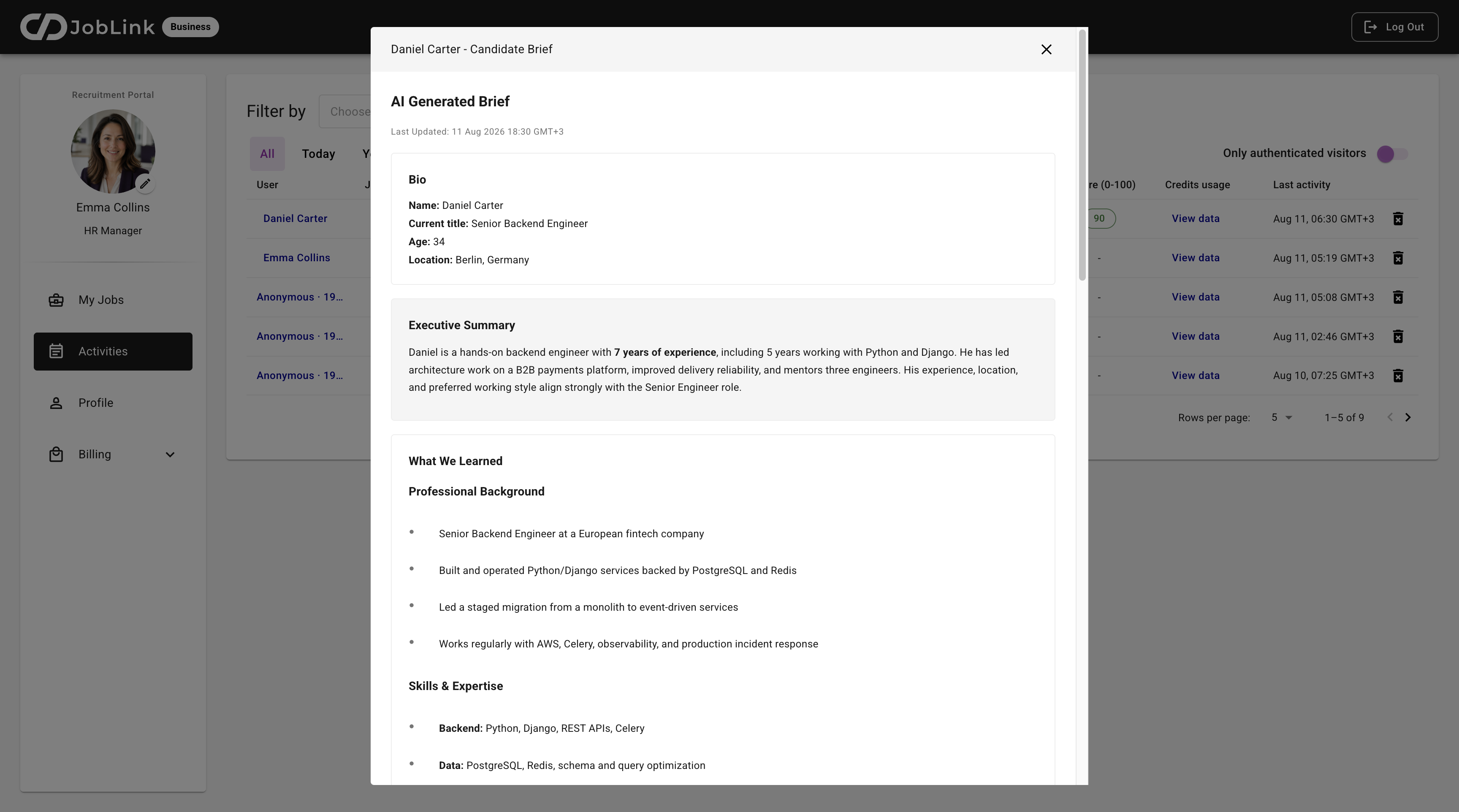
Candidate chats, calls, summaries, screening signals, and permitted uploads return to the recruiter dashboard. The goal is not to manufacture an automatic hiring verdict. It is to organize the first conversation so the recruiter can review better context and decide what happens next.
The boundary is part of the product
Recruiting technology becomes dangerous when fluent output is confused with informed judgment. JobLink is built around a simpler division of responsibility.
The system can make approved vacancy information easier to access. It can ask consistent questions, keep conversation context, and reduce repetitive introductions. But it should not make final hiring decisions, promise outcomes, infer protected characteristics, or pretend to be a human recruiter.
AI can support the conversation. Accountability stays with people.
This is not a limitation we plan to hide. It is a product principle.
Start with one vacancy
The best way to introduce conversational recruiting is not a company-wide transformation project. Start with one real vacancy where candidates regularly need more context.
- Write an honest role overview.
- Add the questions candidates repeatedly ask.
- Define a small set of job-related screening questions.
- Upload only the Knowledge Base material the assistant may rely on.
- Test the page as a candidate through both chat and voice.
- Share the JobLink in one recruiting channel.
- Review the conversations and improve the configuration before expanding.
This produces something more valuable than a polished demo: evidence from a real workflow, with a clear owner and a manageable scope.
What we are building toward
We believe the first stage of hiring can be faster without becoming colder, and more consistent without becoming rigid.
Candidates should be able to understand an opportunity before investing time in an application. Recruiters should be able to scale access to accurate information without surrendering judgment or personal responsibility. Companies should be able to present each vacancy as a conversation worth joining—not merely another page worth scrolling.
That is the direction of JobLink.
On this blog, we will publish what we learn about conversational recruiting, candidate experience, voice AI, screening design, prompt quality, hiring economics, and the practical boundaries responsible teams need.
One link. One role. A clearer first conversation.
See JobLink in action and create a better starting point for your next vacancy.