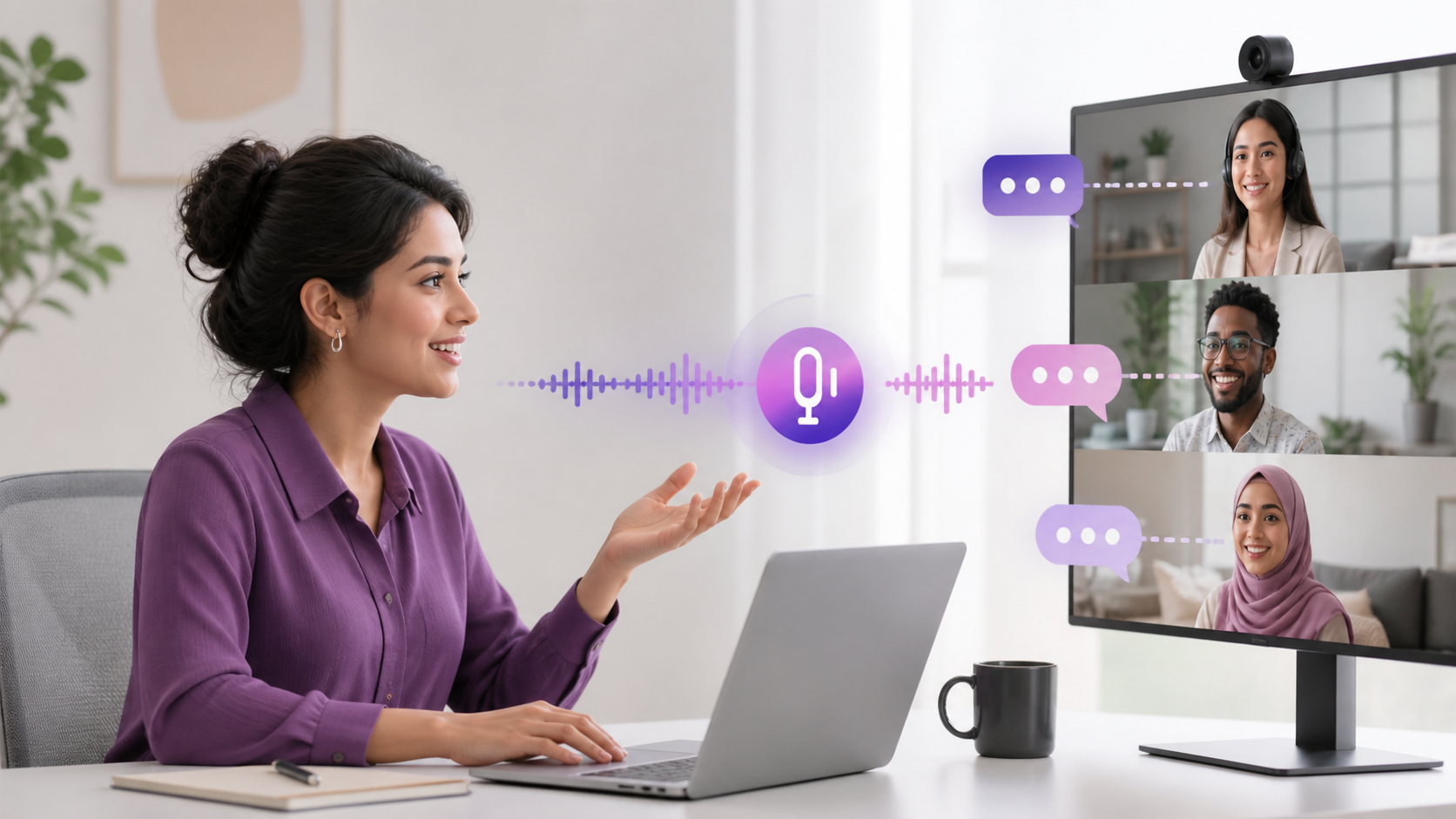
Recruiting is full of work that matters and work that merely repeats. The useful question is not Can AI do this? It is Which parts can AI handle without taking judgment away from the recruiter?
The best automation removes repetition while keeping decisions, relationships, and accountability human.
1. Answering repeated questions about one role
Candidates often ask the same practical questions: location, working pattern, interview stages, responsibilities, technology, language requirements, or what success looks like in the first months.
A JobLink can make those answers available through chat or voice. The recruiter defines the role, instructions, and Knowledge Base; the AI recruiter uses that material to respond. This works best when the source material is specific and current.
Before enabling a JobLink, collect:
- the final job description;
- team and product context;
- working-location and schedule rules;
- the hiring process and realistic timelines;
- benefits that are approved for public communication.
Do not upload contradictory drafts and expect the assistant to decide which policy is correct.
2. Running a consistent first conversation
An early conversation should help both sides decide whether continuing makes sense. It does not need to imitate a full interview.
JobLink lets recruiters configure a greeting and screening questions for a vacancy. Candidates can answer in chat or, where enabled, during a voice call. The value is consistency: every candidate receives the same essential opportunity to explain relevant experience, availability, expectations, and questions.
Consistency is useful. Automatic judgment is not the goal.
Screening questions should be short, job-related, and answerable without privileged background knowledge. A good set usually covers only the facts needed for the next human step.
3. Capturing conversation context
Copying notes after every introductory conversation is easy to postpone and difficult to standardize. JobLink records candidate activity and can produce recruiter-facing summaries from chat and call transcripts.
Use those summaries as a navigation aid, not as unquestionable truth. The recruiter should be able to open the underlying conversation, verify an important detail, and distinguish what the candidate said from what appeared only in an uploaded CV.
4. Collecting information before a human call
A candidate may have a strong question at 22:00, while the recruiter is offline. A public JobLink gives the candidate a place to explore the role when their interest is highest.
That does not mean the system should promise an interview, issue a rejection, or claim that somebody is a perfect match. It means the next human conversation can start with more context and less repetition.
5. Keeping role knowledge available
Policies and role details change. A vacancy-specific Knowledge Base provides a controlled place for supporting files, text, and approved URLs. When material changes, update the relevant source and test the common questions again.
The recruiter still owns the answer quality. A useful maintenance rhythm is:
- Review the most common candidate questions.
- Identify answers that were incomplete or unclear.
- Improve the JobLink instructions or Knowledge Base.
- Retest the conversation before sharing the link more widely.
What should stay human
Keep these responsibilities with people:
- final hiring decisions;
- evaluation of ambiguous or sensitive information;
- reasonable-accommodation conversations;
- compensation negotiation;
- rejection communication that requires context;
- relationship building with shortlisted candidates.
JobLink is designed to improve the first conversation, not replace the recruiting profession or an applicant tracking system.
See how JobLink works and choose one repetitive step to improve first.